The Core Update
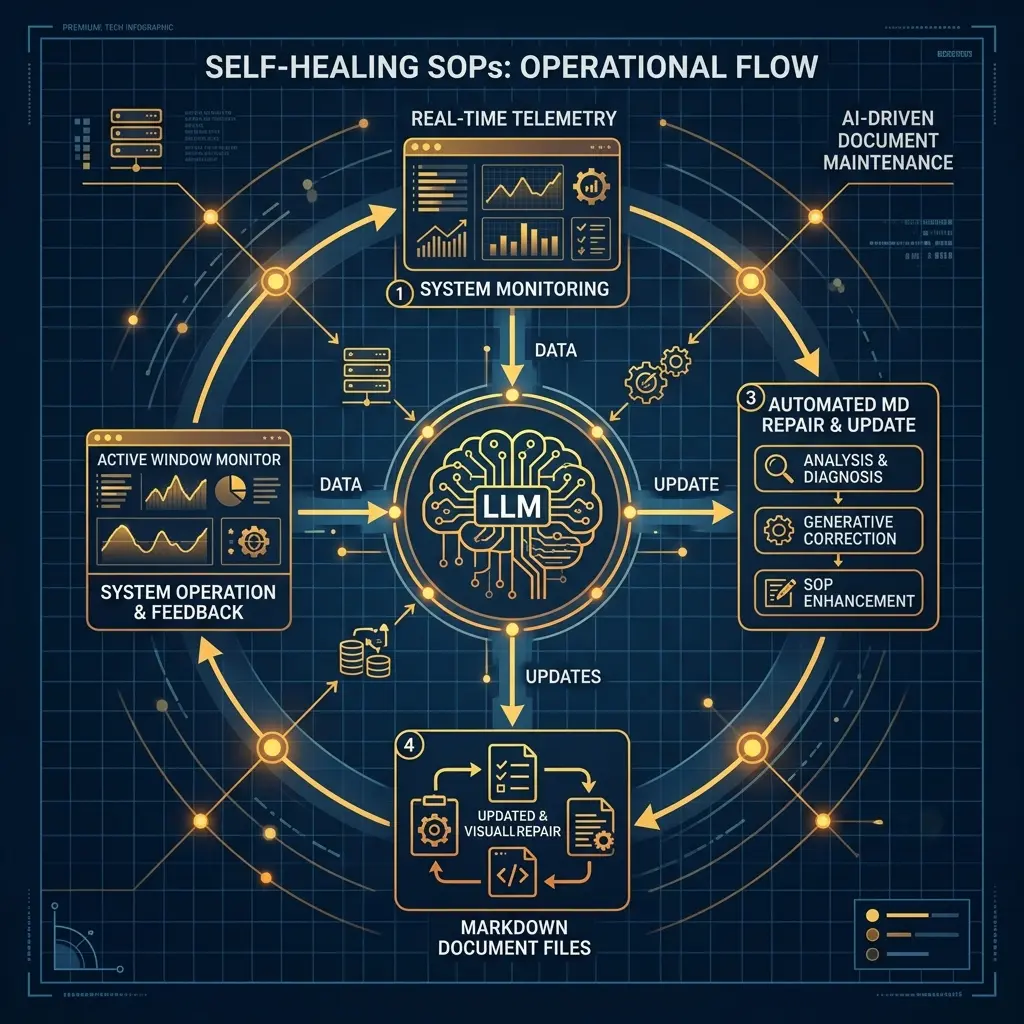
Google Cloud has introduced Project Chrysalis, a reference architecture for autonomous, self-evolving AI agents. This isn't just another chatbot. It’s a production-grade system designed to detect, diagnose, and mitigate distributed system failures in near real-time. By utilizing the Gemini platform and Agent Development Kit (ADK), these agents move beyond static troubleshooting to synthesizing runtime patches during critical outages.Official Source: Google Announcement
Technical Impact & Mechanism
Conventional agents rely on frozen prompts and pre-defined tool sets. Chrysalis changes this by allowing the agent to synthesize mitigation logic on the fly. It functions as a feedback loop: it evaluates counterfactual traffic scenarios in BigQuery, simulates impacts, and enforces boundaries via Model Armor and Binary Authorization.Security is baked into the runtime. No patch executes without a cryptographic signature, and all actions are constrained by OPA policies.
Example of a structured policy constraint for an agent action:
CONSOLE // YAML
SYNTAX_CHECK: OK
# OPA Policy snippet for autonomous agent intervention
allow {
  input.action.type == "traffic_reroute"
  input.context.latency_p99 < 500
  input.governance.dual_custody_approved == true
}
Action Plan for Developers & Businesses
- Audit your telemetry: Ensure high-fidelity logs are feeding into BigQuery. Agents are only as good as the data they ingest.
- Shift to policy-as-code: Move away from manual runbooks. Define your infrastructure guardrails in Open Policy Agent to allow future autonomous systems to operate safely.
- Implement Dual-Custody: For any automated remediation, build a human-in-the-loop requirement into your CI/CD pipeline to ensure critical infrastructure changes are verified.
Waleed’s Insight: Infrastructure failures don't wait for your team to wake up. Automating the fix is necessary, but only if you constrain the agent's behavior first.
Check out my past systems architecture projects | Need a technical audit? Reach out to me here