The Core Update
Google Cloud now offers native TPU support within the vLLM serving engine. This integration is for high-performance inference of long-context, multimodal embedding models. It enables enterprise-grade precision across diverse hardware backends.Official Source: Google Announcement
Technical Impact & Mechanism
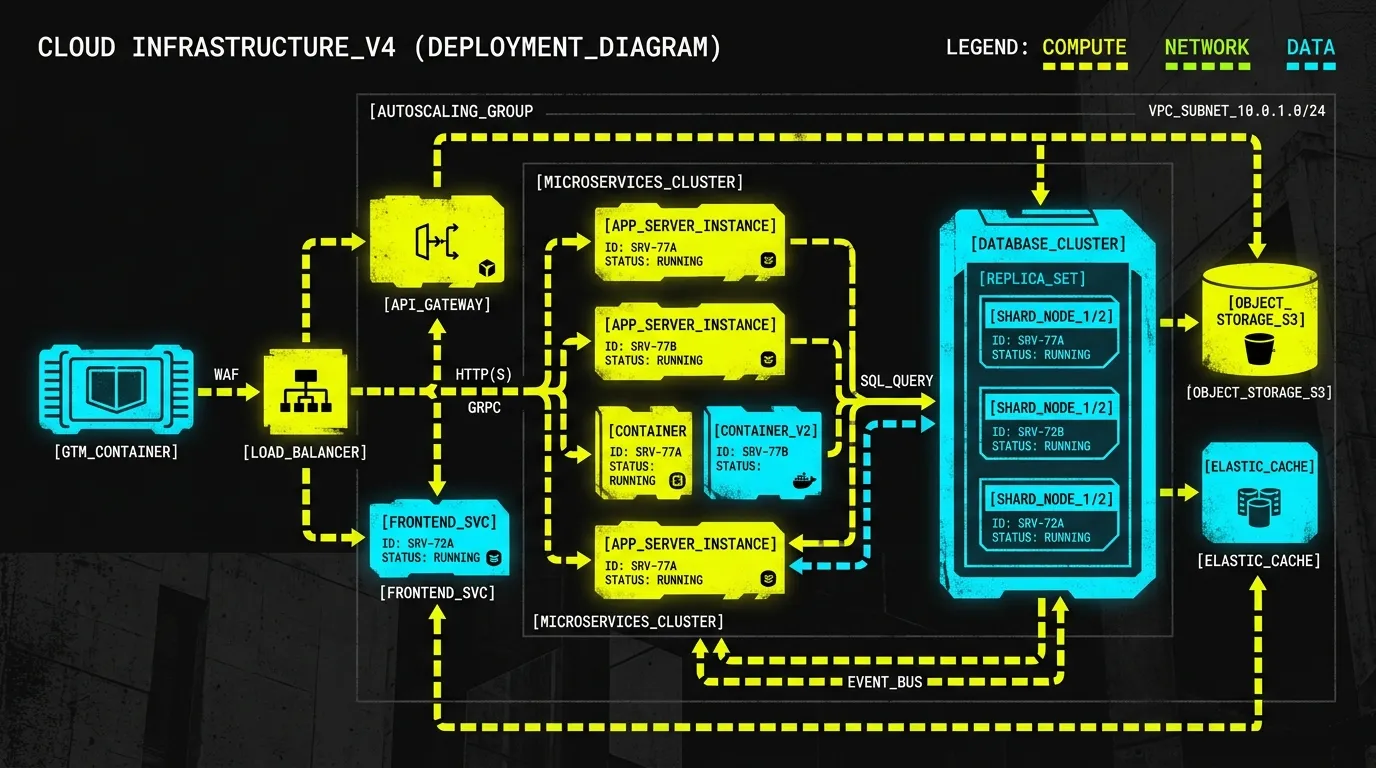
Previously, scaling embedding model pipelines for millions of queries presented bottlenecks. Accessing elastic accelerator capacity and optimizing cost-performance was a common challenge. Traditional GPU setups struggled with dynamic traffic.This update standardizes vLLM on TPUs. It provides architecture-true elasticity. Engineering teams can now scale serving capacity dynamically. Provision TPU nodes directly alongside other XPU instances. This means your compute resources can flex with demand.
Processing ultra-long sequence contexts—think 4K+ text tokens or 15K+ multimodal inputs—demands exact mathematical parity. This is especially true across heterogeneous hardware. Google Cloud tackled this by optimizing vLLM for TPU architectures. Specifically, for models like the Qwen3 Embedding series.
A key fix addresses TPU Matrix Execution Units (MXUs). MXUs have strict divisibility rules when sharding vocabulary matrices via Tensor Parallelism (TP). Google implemented a hardware-safe vocabulary padding strategy. This ensures exact tensor alignment during All-Gather operations. The result is consistently high precision and mathematical integrity, even with complex, long-context models.
Leveraging Google Kubernetes Engine (GKE) Custom Compute Classes enhances this. Organizations can automate node autoscaling. Define strict priority rules. Scale up across different capacity types or accelerators if one isn't immediately available.
# GKE Autopilot Custom Compute Class configuration example (conceptual)
# This demonstrates how to define specific resource requests and target
# different accelerator types for dynamic scaling within GKE.

apiVersion: autoscaling.gke.io/v1
kind: ManagedNodePool
metadata:
  name: embedding-inference-pool
  namespace: default
spec:
  clusterName: my-llm-cluster
  location: us-central1
  nodeCount: 1
  scaling:
    minNodeCount: 0
    maxNodeCount: 10
  nodeConfig:
    machineType: n2-standard-4
    accelerators:
      - acceleratorType: nvidia-tesla-v100
        acceleratorCount: 1
    # Define a custom compute class to prefer TPUs when available or needed
    # This allows GKE to scale to TPU nodes based on configured priorities
    customComputeClasses:
      - name: tpu-v4-inferencer
        accelerators:
          - acceleratorType: tpu-v4-podslice
            acceleratorCount: 1
        resources:
          cpu: 8
          memory: 30Gi
        # Priority or affinity rules would be defined at the pod/deployment level
        # to target this custom class, enabling elastic scaling across XPU types.
Action Plan for Developers & Businesses
- Migrate to vLLM on TPU: Evaluate your existing embedding inference pipelines. Transition to vLLM deployments on Google Cloud TPUs for improved scaling and efficiency.
- Architect for Elasticity: Design your serving infrastructure to leverage GKE Custom Compute Classes. Prioritize accelerator types for intelligent, cost-effective autoscaling across GPUs and TPUs.
- Validate Precision: Conduct rigorous testing for mathematical parity. Ensure your long-context multimodal embeddings maintain accuracy across heterogeneous hardware.
- Optimize Long-Context Models: Adopt the latest vLLM versions. Benefit from optimizations like the hardware-safe vocabulary padding for demanding, high-precision embedding tasks.